| 1. |
Remove the rear wheel &
tire. |
| 2. |
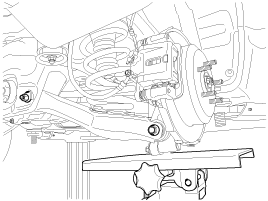
Support the lower portion of the rear lower
arm the jack.
|
| 3. |
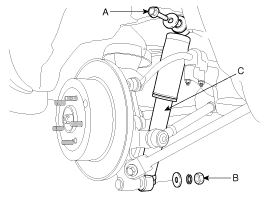
Remove the rear shock absorber (C) by
loosening the bolt (A) and nut (B).
|
| 1. |
Check the rubber parts for wear and
deterioration. |
| 2. |
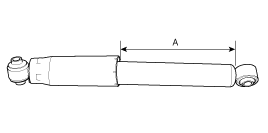
Compress and extend the piston rod (A) and
check that there is no abnormal resistance or unusual sound during
operation. |
| 1. |
Fully extend the piston
rod. |
| 2. |
Drill a hole on the (A) section to discharge
gas from the cylinder.
|
The gas coming out is harmless, but be
careful of chips that may fly when drilling. Be sure to wear
safety goggles or eye protection when performing this
task. | |
| 1. |
Support the lower portion of the rear lower
arm with a jack.
|
| 2. |
Connect the rear shock absorber (C) with the
carrier assembly and then tighten the nut (B).
Tightening
torque :
100 ~ 120N.m (10.0 ~ 12.0kgf.m, 72 ~
87lb-ft)
| |
| 3. |
Adjust height of the jack to place the bolt
(A) holding rear shock absorber (C) and body through the mating
holes and then tighten the bolt (A).
Tightening
torque :
140 ~ 160N.m (14.0 ~ 16.0kgf.m, 101 ~
116lb-ft)
|
|
| 4. |
Install the rear wheel &
tire.
Tightening
torque :
90 ~ 110N.m (9.0 ~ 11.0kgf.m, 65 ~
80lb-ft)
| | |


